The Montana Reserved Water Rights Compact Commission (RWRCC) recently released a new report on the Flathead Indian Reserved Water Rights Compact, as directed by Governor Steve Bullock. The report addresses some of the concerns over the compact and lists some of the problems that will likely occur if the compact is not ratified by the 2015 Montana Legislature, when it will go before the legislature for a second time. If passed by the state legislature and thereafter Congress, the compact would quantify the water rights of the Confederated Salish and Kootenai Tribes (CSKT).
The RWRCC, CSKT, and five federal government agencies*, have been negotiating the terms of the Flathead Reservation Federal Reserved Water Compact for over a decade. The compact quantifies the tribal water right for all past, present, and future uses, including non-consumptive uses (in-stream flow), and off-reservation water rights. Five of the seven tribes in the state have already finalized compacts that quantify tribal water rights and the Salish and Kootenai were the remaining two.
The process has been embroiled in controversy since the beginning, and does not seem to be any less controversial now. Water rights and tribal reserved water rights in particular have a contentious history. The Flathead Reservation was established by the Hellgate Treaty in 1855, which reserved 1.3 million acres. Not until Winters v. United States (1908) were the water rights defined as reserved along with land reservations, so several decades passed without any legal legitimacy given to water use by tribes in the reservation. The Dawes Severalty Act of 1887 and the Allotment Act of 1904 later allowed procurement and settlement by non-Indians, leading to the current situation: today non-Native Americans outnumber Native Americans within the Flathead Reservation. For a history of the fight for water rights for the CSKT, go here.
The U.S. Supreme Court, in response to many cases of litigation over tribal reserved water rights, directed tribes and states to approve compacts quantifying tribal water rights. In November of 2012, the CSKT and RWRCC reached a settlement, and then re-released a revised settlement after several public meetings in February 2013. The compact was brought to the state Legislature, but the bill failed to make it through committee.
It is likely that the failure of the legislature to pass the compact will lead to a very expensive litigation process over the next several years. The report from the state this week has done very little to appease opponents to the compact.
* Bureau of Reclamation, Bureau of Indian Affairs, U.S. Fish and Wildlife Service, U.S. Department of Justice, U.S. Department of Interior
Sources:
Tristan Scott, Flathead Beacon (12-31-13) Report Released on SCKT Water Rights Compact
Vince Devlin, Missoulian (12-17-13) Report Released on CSKT Water Compact, Impact if Fails, Off-Reservation Claims
Mike Dennison, Missoulian (1-7-14) Water Users Debate Flathead Compact at Legislative Meeting
Stephen Walker, Lewis, Longman and Walker, P.A. (11-10-13) The Confederated Salish and Kootenai Tribes Fight for Quantified Federal Water Rights in Montana: A Contentious History

water issues in the intermountain west
Showing posts with label agriculture. Show all posts
Showing posts with label agriculture. Show all posts
Tuesday, January 7, 2014

Friday, January 11, 2013
Exceptional Drought Conditions Squeeze Farmers
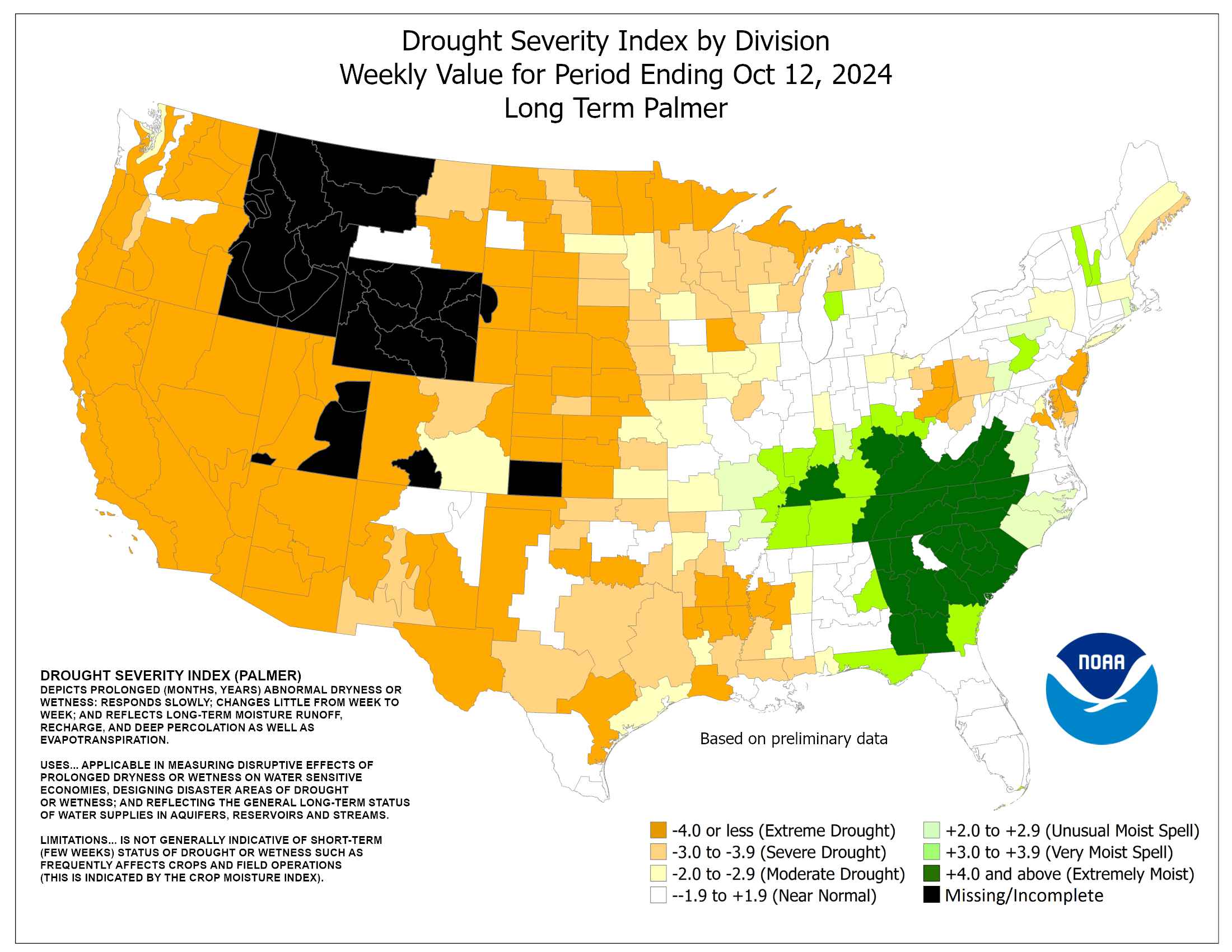
 Communities all over the Midwest and parts of the Intermountain West are continuing to suffer under extreme and "exceptional" drought. Cities all over the region are urging residents to conserve as much as possible, while crossing their fingers that rain and snow will fall and replenish water storage supplies. Communities like Paris, Arkansas, and many others, which have implemented strict water use restrictions.
The drought has severe impacts on agricultural production, an important economic service in the Mid-and Intermountain West. The U.S. Congress was unable to pass a bipartisan Farm Bill last year, but the drought has spurred many, including Senators Michael Bennet and Mark Udall, to plead to the House to pass the bill this year. The Farm Bill includes provisions to aide ranchers and farmers in times of drought.
In Colorado, the drought is in its third consecutive year, and many rivers are flowing below 10% of their normal levels. Yesterday, the USDA designated roughly two-thirds of Colorado's counties as disaster areas as a result of prolonged, extreme drought conditions (La Junta Tribune). Although snowpack is accumulating in the Colorado headwaters region in the western part of the state, the eastern part of the state continues to remain dry. For more information about the drought in Colorado, visit CSU's Colorado Climate Center.
Monday, January 7, 2013
Las Vegas pipeline project approved
 |
| photo from wikia |
The pipeline will transport 84,000 acre-feet of water from groundwater sources in rural Nevada counties across 263 miles.
Sunday, September 30, 2012
Water and Milk: Drought drives costs up
In Colorado, the price of milk has gone up slightly, giving dairy farmers a little room to breathe after drought conditions have driven the price of animal feed up. The price of corn has gone up by 50% this summer, and alfalfa and soybeans have followed similarly. However, the price of milk does not often see sharp increases, which means in tight years like this year and 2009, means dairy farmers get squeezed.
In response to the high feed prices and anticipated low profits for the year, many dairy farmers will likely slaughter a portion of their livestock. Culling herds is a difficult choice, but often inevitable.
Consumers may be dismayed to see the price of milk at the grocery store rise, but it will grant a little relief to the dairy producers.
Source: CBS Denver
Friday, September 21, 2012
40,000 acres to be reserved for Rio Grande water conservation
Colorado and the USDA announced the enrollment of 40,000 acres of irrigated cropland in the Rio Grande basin into the Conservation Reserve Enhancement Program (CREP). The program will incentivize land owners to enroll their properties as wildlife habitat, grasslands, or wetlands, which will have a positive impact on groundwater replenishment and in-stream flows. Landowners will agree to reserve contracted lands as restoration areas and save a proportional amount of irrigation water for 14-15 years. They also have the option of participating in an irrigation water retirement program.
Source: Valley Courier http://www.alamosanews.com/v2_news_articles.php?heading=0&page=72&story_id=26519
Source: Valley Courier http://www.alamosanews.com/v2_news_articles.php?heading=0&page=72&story_id=26519
Tuesday, September 18, 2012
Debate over Fracking Flares
Hydraulic Fracturing (or fracking) has been the focus of considerable debate in the energy and environment world. Advocates of fracking point to the added jobs and economic benefits that new projects have on surrounding communities, as well as adding to the supply of natural gas, a cleaner alternative to coal. Public health experts are concerned about impacts to water and air quality and the implications for human health.
 Fracking may have a significant impact on agriculture, especially in the West where water is comparatively scarce. In Colorado, the New York Times reported that farmers are finding it increasingly difficult to compete with oil and gas companies for water. Many officials argue, however, that oil and gas companies only lease surplus water from municipalities and so far haven't displaced agriculture significantly. However, the fracking industry is continuing to grow and it remains to be seen whether farms can continue to get the water they need.
Source: The Colorado Statesman, NRDC, New York Times
Thursday, September 13, 2012
Drought affecting Colorado Corn Growers
The early and disappointing spring snowmelt, high temperatures, and drought conditions have taken their toll on corn farmers in Colorado and across the Midwest. Extreme drought conditions were officially declared on August 21, and a growing proportion of corn harvests are declared "poor."
The low supply is hurting the corn farmers, but also driving the price of corn up, making it difficult for ranchers who purchase corn for animal feed.
 Legal requirements of the Colorado River Compact require Colorado water rights holders to let a certain amount of water leave the state for downstream states. This has put the pressure on upstream users in Colorado during this particularly difficult drought year.
Climate Change experts agree that more extreme weather, including drought and flooding, will increase in their severity over the coming decades. This will have great impact on the agricultural production sector of the U.S. economy.
Source: Brush News Tribune
Subscribe to:
Posts (Atom)