Showing posts with label conservation. Show all posts

Friday, August 23, 2013

Reduced Colorado River releases from Lake Powell

In Salt Lake City last week, the BLM announced that the amount of water released from Lake Powell in water year 2014 (starting in October) will be reduced by 9%. The volume of water released each year is based on guidelines set in 2007 by the Secretary of Interior, which coordinate the management of large reservoirs along the Colorado River, including Lake Powell and Lake Mead. According to the guidelines, "A Shortage Condition exists when the Secretary determines that insufficient mainstream water is available to satisfy 7.5 maf [million acre feet] of annual consumptive use in the Lower Division states." This certainly applies today, and the release from Lake Powell will be 7.48 maf, the lowest release since Glen Canyon Dam was constructed in the 1960s. The BLM projects that Lake Mead levels will decline an additional eight feet next year as a result of the reduced release from Lake Powell.

Upper Colorado Regional Director Larry Walkoviak said in a statement, "This is the worst 14-year drought period in the last hundred years."

photo credit: Glen Canyon National Recreation Area
Although the immediate effect on Colorado River water rights holders is small for now, shortages like this are predicted to become more frequent because of changing climate conditions. As Erik Stokstad reports in Science Insider, more water has been promised to users than can be delivered.

Tuesday, April 23, 2013

Utah Governor stops Nevada water sharing agreement

This month, Utah Governor Gary Herbert said he would not sign an agreement that would divvy water under the shared border between Utah and Nevada. This water had been eyed by the thirsty metropolis of Las Vegas a few hours south. The pact was drawn up four years ago in response to a 2004 Congressional order that required the states to reach an agreement before any transfers of water would be permitted in the Snake Valley. The agreement was controversial because of a proposed pipeline enabled by the pact that would send Snake Valley water to Las Vegas. The pipeline spurred protests from farmers, environmentalists, tribes, and ranchers in Utah and parts of Nevada.

It was not clear whether Gov. Herbert would support the agreement, and he shocked both supporters and critics of the project when he announced his decision. He told the Deseret News, "At the end of the day, when it comes down to those people who have the most to lose — it's their water, their lifestyle, their livelihood — I can't in good conscience sign the agreement. It's that simple."

In Utah, the reaction has been positive. The majority of local citizens and officials at the county level in Millard and Juab counties did not support the water sharing agreement.

The director of Nevada Department of Conservation and Natural Resources said that they are "evaluating all of [their] options in light of Gov. Herbert's decision." A lawsuit could be forthcoming.


Tuesday, April 2, 2013

Water Restrictions Implemented in Colorado

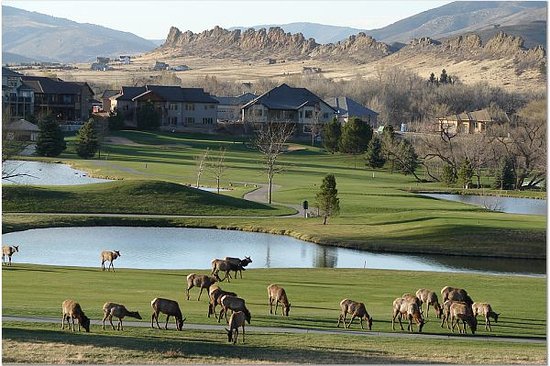
As spring approaches, many Colorado cities, including Colorado Springs, Fort Collins, and Denver, are gearing up for another dry year by instituting tight water restrictions.

In Colorado Springs, watering lawns will be restricted to twice a week for three hours in an effort to bring water usage down 30% from last year. Addresses with odd numbers are allowed to waer on Tuesday and Saturday, even numbers on Sunday and Wednesday. Fines for non-compliance are up to $500. The restrictions go into effect this week, and are typical to the type of restrictions being implemted across the state.

From tripadvisor

As drought conditions persist (long past the point of "severe" drought classifications), many other municipalities throughout Colorado are having to consider implementing restrictions. Cities that have traditionally kept water use unrestricted, like Loveland, will likely have to follow suit.

The Reporter Herald notes that some coservationists see a silver lining in the drought, which is that perhaps people will begin to understand the real consequences to living in an arid envionment. (However, this blogger is skeptical.)

Wednesday, February 6, 2013

market based energy and water conservation legislation introduced in Texas

This week, legislation was introduced to the Texas Senate to enable financing of water and energy conservation improvements for building owners using property assessments. Programs of this sort are in place in many other states, and are called Property Assessed Clean Energy (PACE) programs. Essentially, this allows cities to offer building owners a long-term loan that can be paid back each year on the property tax bill. The cost of improvements are added to the property tax bill over the course of several years. Depending on the improvement project, the savings will be reflected in monthly water and energy bills. According to the PR Newswire, this funding mechanism will enable building owners to put improvements in place that would otherwise be cost prohibitive without the low-cost, long-term loans and repayment method this program puts in place. The program is voluntary, and each loan is attached to the property, not the property owner. Similar legislation is expected to be submitted to the Texas Congress soon.

For more information about PACE financing of conservation improvements, watch this video:


Monday, January 7, 2013

Las Vegas pipeline project approved

photo from wikia
The controversial pipeline proposal that would transport groundwater from rural Nevada to the thirsty city of Las Vegas was given approval by the BLM this week, according to the RCAC and the Associated Press. The pipeline has been on the project horizon for decades, and despite opposition from a diverse set of groups including ranchers, environmentalists, Native American tribes, and municipalities, the project has overcome what could be the last hurdle, and construction may begin this year. The population of Las Vegas is around 2 million, and continues to grow, increasing the pressure on the city to look for ways to augment the water supply.

The pipeline will transport 84,000 acre-feet of water from groundwater sources in rural Nevada counties across 263 miles.

Thursday, November 29, 2012

Arkansas River to remain dam free

American Rivers released a press release yesterday applauding the decision by Colorado Springs Utilities to pursue alternative means of supplying water to the city besides a proposed dam on the Arkansas River. CSU had proposed the dam all the way back in 1990. Grassroots efforts by organizations like American Rivers and the Friends of the Arkansas River held the project off. This year CSU conducted studies to identify possible alternatives to the dam. As a result, they found that another delivery system would provide the same benefits without the deleterious effects on wildlife, recreation, streamflow, and economics. Conservationists and anglers are pleased with the decision.
However, all is not well in the Arkansas River Valley, which is continuing to struggle under continuing drought conditions. In some areas, especially the lower end of the valley, the drought is entering its third year. Snowpack is currently at 26% of its normal volume, compared to the slightly less dismal average of 46% in the rest of Colorado. (The Chieftain)

Thursday, October 11, 2012

Disease Resistant Trout stocked in Colorado River

Source: Troutpursuit.blogspot.com
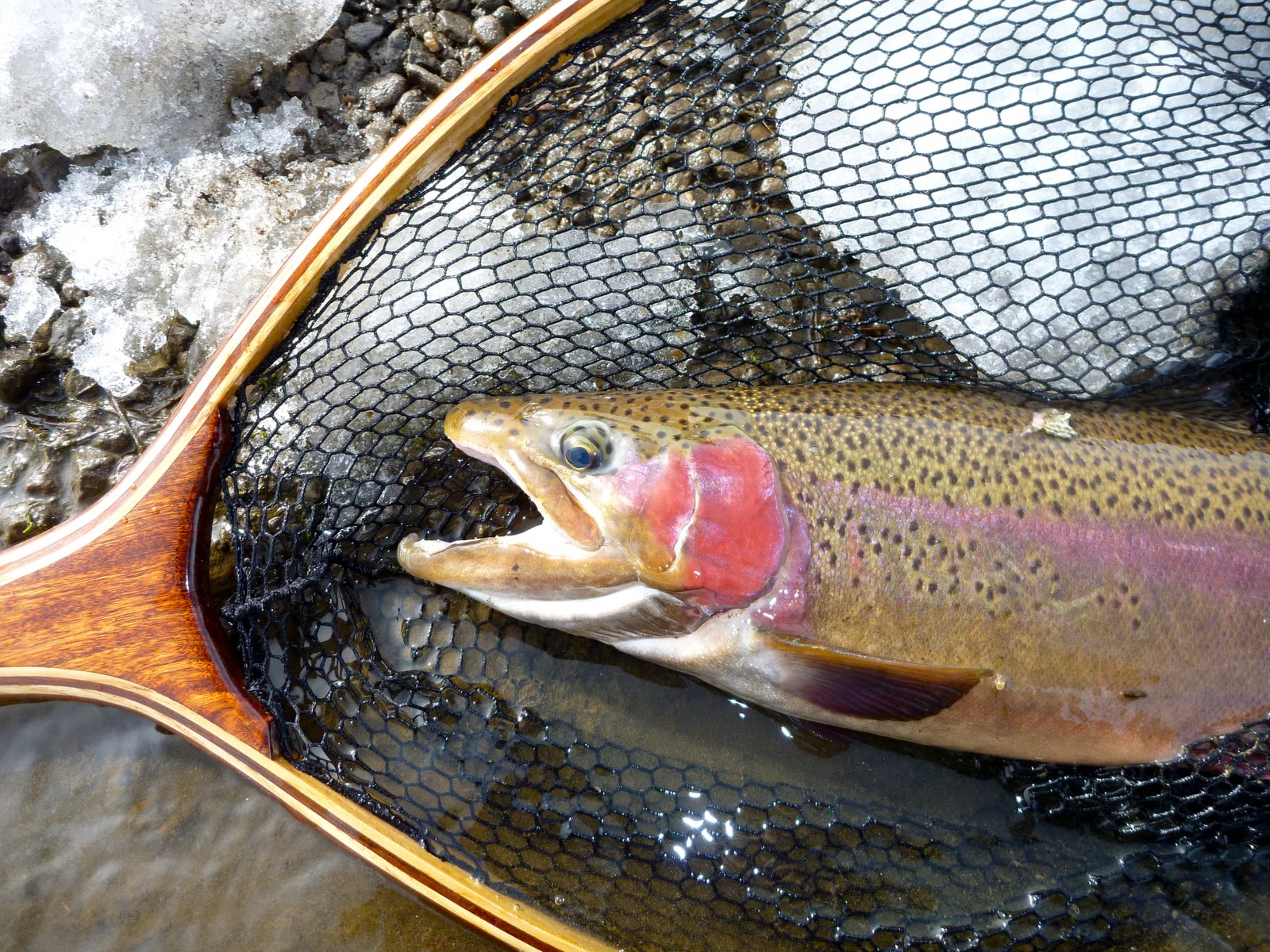
July monsoons sent silt and debris coursing down the Colorado River, which led to severe fish kills. So wildlife officials are stocking the effected areas with Hofer rainbow trout. As a bonus to anglers, the stocked rainbow trout will be resistant to whirling disease, which effects some species of trout and salmon. Officials hope that the stocked fish will help replenish fish populations after this summer's kills, and also introduce whirling disease resistance into the rest of the population.

Source: RealVail

Wednesday, September 26, 2012

Does water conservation kill trees?

In Colorado, drought conditions have put the pressure on managers, residents, and utilities to conserve as much water as possible. As the population continues to grow, water demand goes up, so residential, industrial, and agricultural activities are pressured to use less and less water.

Photo Credit: Jason Edwards @ National Geographic
However, the Northern Colorado Water Conservancy District General Manager reminded legislators and business leaders in Fort Collins this week that cutting off water for residential lawns could "jeopardize" a community's tree canopy. Parched trees is a growing concern for drought-prone communities instituting new water conservation measures. Tree kills can result from less water percolating down from lawns and gardens. Under-watered trees shed their leaves early, stop growth, and are more susceptible to disease.

This situation is indicative of the trade-offs communities have to make when allocating water resources. Where should the water go? Fracking or shade trees? Car-washes or swimming pools? Do shade trees belong in areas that are naturally arid?

Many community leaders and policymakers are mulling other water management strategies, like recycling municipal water for certain uses, and augmenting supply by building new reservoirs.

Source: The Coloradoan

California passes water conservation bill

A bill just passed in California that would focus on water conservation measures for businesses, especially car washes. The law will require at least 60% of water used at car washes to be recycled water. Technology that recycles water on-site is easy to install, and already used at many California car washes. The technology may actually lower the water bill for these businesses.
Credit: Pat's Express Carwash

This sensible bill means that less treated, drinkable water will be used to spray the dirt and bugs off of cars, instead using recycled water that has been filtered to remove detergents and dirt.

Assemblyman Mike Gatto is the author of the bill.


Source: eNewsChannels

Friday, September 21, 2012

40,000 acres to be reserved for Rio Grande water conservation

Colorado and the USDA announced the enrollment of 40,000 acres of irrigated cropland in the Rio Grande basin into the Conservation Reserve Enhancement Program (CREP). The program will incentivize land owners to enroll their properties as wildlife habitat, grasslands, or wetlands, which will have a positive impact on groundwater replenishment and in-stream flows. Landowners will agree to reserve contracted lands as restoration areas and save a proportional amount of irrigation water for 14-15 years. They also have the option of participating in an irrigation water retirement program.

Source: Valley Courier http://www.alamosanews.com/v2_news_articles.php?heading=0&page=72&story_id=26519

Monday, September 17, 2012

Utah Municipality Brainstorms Water Conservation Strategies

Bountiful City, Utah is facing a difficult truth: Residents there use 40 more gallons a day than the average American water user, despite the fact that Utah is a semi-arid state. Most of the water is spent on landscaping and lawns.

Councilmembers debated the utility of starting a secondary metering system that would help residents monitor their outdoor water use, since they believe most of the waste comes from residents forgetting to turn off their automatic sprinklers when it rains, for example.

Outdoor water use continues to pose a conservation quandary for policy makers and city utilities. Pricing schemes, conservation education programs, and monitoring are all on possible solutions for helping residents conserve more water.

Source: The Standard Examiner

An ongoing study at Utah State University has found that residents do not uniformly prefer one conservation approach. Some residents prefer price-based programs that would offer financial incentives for conserving water and burdens for over-users, while others prefer simply having more information about their water use (more comparison tables, indoor and outdoor meters). (Endter-Wada et al., Forthcoming). This may prompt more municipalities to offer a variety of conservation programs that can be subscribed to.