Showing posts with label infrastructure. Show all posts

Friday, May 10, 2013

Think at the Sink for Drinking Water Week!

Originally posted at It's Our Environment.

This week is national drinking water week, and the theme is “What do you know about H2O?” Have you ever considered how water travels from its source and ends up in your kitchen sink?

In 2006, I worked as a volunteer in South Africa. One day I drove across the province to visit a game preserve, leaving the city where I spent most of my time. The contrast between the city and the country was always jarring, and this day I drove farther into the countryside than I’d ever been. Gradually towns dissipated and were replaced by clusters of domed huts. Off to one side of the road, I spotted a woman and her daughter carrying buckets of water into their village. It is hard to describe the dissonance that I felt during this recreational outing to look at elephants with a liter of bottled water tucked into my seat. I’d never had to haul water into my home; I just turned on the tap and safe, clean water poured out. UNICEF estimates that many people in developing countries, particularly women and girls, walk six kilometers a day for water.

The Safe Drinking Water Act authorizes the EPA to set drinking water standards, protect drinking water sources, and work with states and water systems to deliver safe drinking water some 300 million Americans. In the U.S., the last century has seen amazing improvements to drinking water quality. Mortality rates have plummeted and life expectancy has climbed as a result of better science and engineering, public investment in drinking water infrastructure, and the establishment of landmark environmental laws like the Clean Water Act and Safe Drinking Water Act. Some historians claim that clean water technologies are likely the most important public health intervention of the 20th century.

Today, we can celebrate the fact that the vast majority of people living in the United States have access to safe drinking water. Ninety-two percent of Americans receive clean, safe drinking water every day, and EPA is working to make that number even higher by partnering with states to reduce pollution and improve our drinking water systems. However, we should be aware of new challenges to our drinking water systems like climate change, aging infrastructure and nutrient pollution.

For drinking water week this year, stop and think about how far we’ve come by paying attention each time you turn on your tap.

Tuesday, April 2, 2013

America gets a report card and it's not good

This month, the American Society of Civil Engineers released a 2013 report card for America's infrastructure. Overall, America's GPA is a D+. Dams, Drinking Water, and wastewater each got a D. Inland waterways and levees got a D- each. It is clear that the infrastructure we rely on to transport, distribute, treat, and store water is in pretty poor condition.

Check out the interactive report card at www.infrastructurereportcard.org.

Monday, January 7, 2013

Las Vegas pipeline project approved

photo from wikia
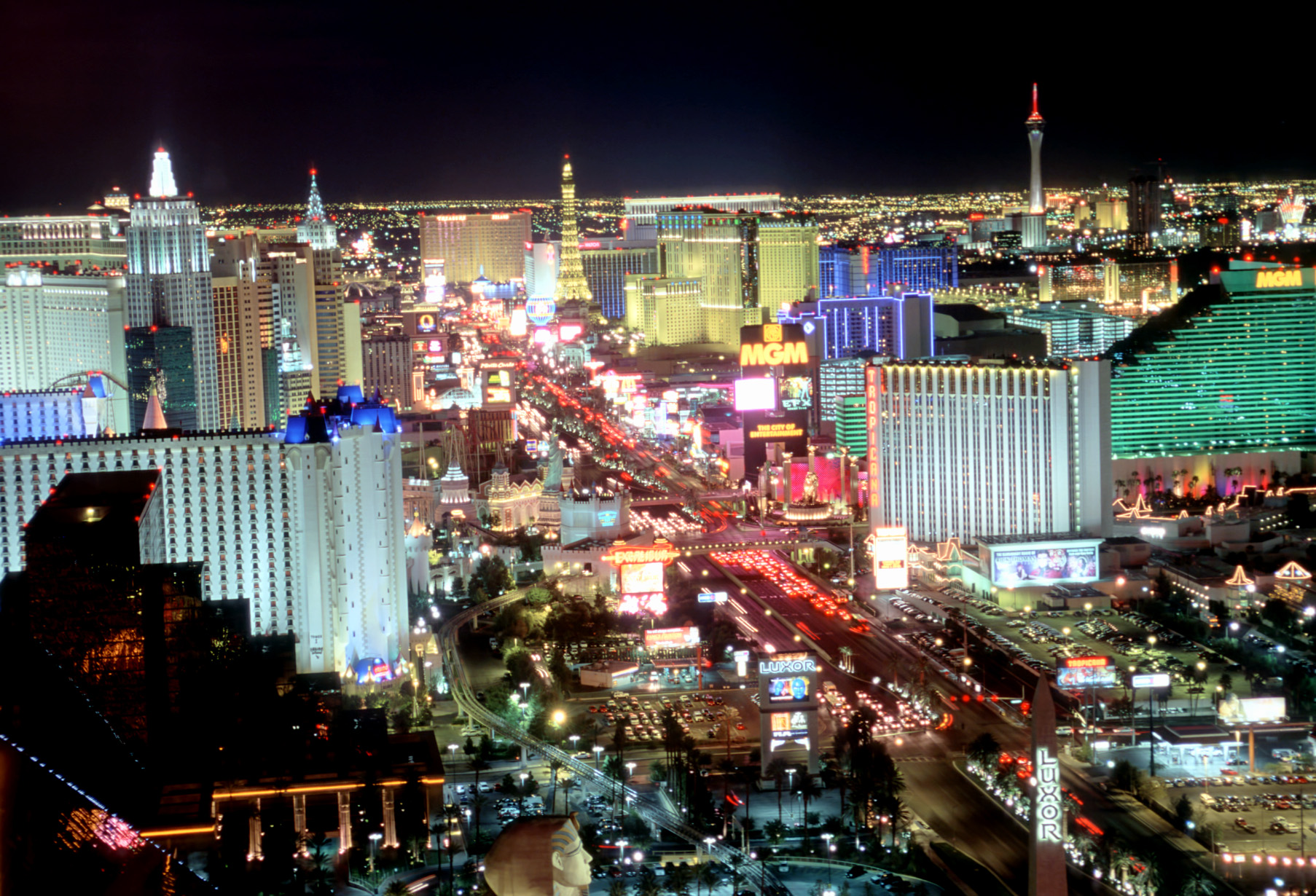
The controversial pipeline proposal that would transport groundwater from rural Nevada to the thirsty city of Las Vegas was given approval by the BLM this week, according to the RCAC and the Associated Press. The pipeline has been on the project horizon for decades, and despite opposition from a diverse set of groups including ranchers, environmentalists, Native American tribes, and municipalities, the project has overcome what could be the last hurdle, and construction may begin this year. The population of Las Vegas is around 2 million, and continues to grow, increasing the pressure on the city to look for ways to augment the water supply.

The pipeline will transport 84,000 acre-feet of water from groundwater sources in rural Nevada counties across 263 miles.

Thursday, November 29, 2012

Arkansas River to remain dam free

American Rivers released a press release yesterday applauding the decision by Colorado Springs Utilities to pursue alternative means of supplying water to the city besides a proposed dam on the Arkansas River. CSU had proposed the dam all the way back in 1990. Grassroots efforts by organizations like American Rivers and the Friends of the Arkansas River held the project off. This year CSU conducted studies to identify possible alternatives to the dam. As a result, they found that another delivery system would provide the same benefits without the deleterious effects on wildlife, recreation, streamflow, and economics. Conservationists and anglers are pleased with the decision.

However, all is not well in the Arkansas River Valley, which is continuing to struggle under continuing drought conditions. In some areas, especially the lower end of the valley, the drought is entering its third year. Snowpack is currently at 26% of its normal volume, compared to the slightly less dismal average of 46% in the rest of Colorado. (The Chieftain)

Thursday, November 1, 2012

What Hurricane Sandy tells us about Infrastructure

We've all heard by now some of the critical infrastructure that has been damaged by Hurricane Sandy in New York, New Jersey and the rest of the affected area. Subway tunnels, power plants, sidewalks and roads, communication systems, internet and cable networks, and water and sewer pipes are some of the infrastructure damaged in the 100-year storm. State officials, FEMA, and the White House have dealt with the hurricane impressively, responding quickly and providing relief to people whose properties were damaged. I am amazed at how well people cooperated together to make sure people were safe.


New York Governor Andrew Cuomo spoke Wednesday at a press conference, stating that climate change cannot be ignored by politicians anymore, who are playing a game of Russian Roulette by failing to address the issue. He advocated for upgrading and re-designing New York's infrastructure, much of which is outdated and in-need of maintenance or re-design.


The hurricane affords us the chance to dissect just how extreme weather events and infrastructure planning are related. I want to make sure I mention that although New York has huge infrastructure demands with a growing population and aging sewers, roads, and facilities, it has a comparatively proactive tax structure with which it tries to meet those demands. However, those remaining infrastructure deficiencies contributed to the scope of the damage incurred during the hurricane.

Water professionals and researchers (ahem) have been advocating for investment into our crumbling infrastructure for decades. In 2008, the American Society of Civil Engineers released a Report Card for New York detailing infrastructure deficiencies, stating that the state's bridges, roads, and mass transit system were vulnerable. The potential for more frequent extreme weather events as a result of climate change only makes the issue more important. However, a slumped economy and political grid-lock have stood in the way of significant upgrades or new policies. After the hurricane, New York, New Jersey and other affected states will acquire federal emergency funding to repair and upgrade infrastructure that probably needed upgrading before the storm hit.

Federal emergency funding is often used to repair infrastructure because of accidents that could have been avoided with a more proactive planning approach. This is borne of two things: lack of funding, and lack of political capital.

Lack of Funding: Cash-strapped communities all over the U.S. do not have access to the funds they require to make critical infrastructure upgrades. This forces them to wait for an emergency situation to qualify for federal or state emergency aide to address the problem. One example in Logan, Utah was a 2009 landslide that destroyed a 100-year-old, leaky, earthen irrigation canal on a steep hill. The landslide killed three people. As a result, federal funding was dispersed to the community, and a more efficient canal system will be installed at the federal taxpayer's expense.

Lack of Political Capital. Infrastructure is not a sexy issue, even though it is such an important part of our daily lives. In our democratic society, raising taxes for roads or pipes can be met with opposition, and looming elections can motivate a policymaker to simply "kick the can down the road." As a result it takes a trigger event - an accident, storm, etc. - before the general population supports a response, even if the issue has long been recognized by "insiders" as needing attention.

As a result, trigger events are often necessary to unlock the political and monetary capital needed to make significant infrastructure investments. However, this is problematic for two reasons.

1) It externalizes the cost for local infrastructure upgrades to federal taxpayers. When a disaster occurs, communities can apply for federal emergency funding, relegating the cost for local infrastructure upgrades to federal taxpayers. In addition, federally-funded projects incur extra costs to cover NEPA and other federal requirements and processes, increasing the overall cost of the project.

2) It creates emergency situations. Investment into climate change-resilient, safe infrastructure would ensure that a community could withstand extreme weather events more effectively. Failure to do so creates a scenario where emergency situations are not only inevitable, they are needed in order to address infrastructure needs in a totally reactive policy environment. The policy approach is therefore "repair the past" rather than "plan for the future." The uncertainty brought by climate change only increases the responsibility on policymakers and politicians to prioritize infrastructure investment as a matter of national security and ethics.

Proactive planning at the state and local level can make communities more resilient to emergency situations, avoid certain negative outcomes, and help them rely less on federal emergency funding to correct pre-existing infrastructure issues. As a result, federal emergency funding can be better allocated across the country to address what proactive local and state planning could not foresee.

See New York Times, the Scientific American,

Thursday, October 18, 2012

Clean Water Act turns 40

Today marks the official 40th anniversary of the Clean Water Act becoming law. The milestone has spurred a number of editorial content across the Internet - from Kristen Bell to the National Geographic. On this blog, I've already highlighted the law, its effect on pollution mitigation, and where the law currently falls short meeting our water management needs today here. Managers and commenters across the web have raised other issues that should be addressed in order to strengthen the CWA and water policy in the United States:

- Clarify the scope of the act to include small tributaries and waters that have ecological impacts on the waters of the United States (National Geographic)

- Focus on policy mechanisms to address non-point source pollution like fertilizer run-off and urban stormwater (LA Times)

- Retrofit urban and rural water infrastructure to meet current and future needs more efficiently (LA Times), especially sewage treatment plants (NY Times)

The benefits of the 1972 Clean Water Act are obvious. The Chattanoogan lists some of the statistics:


  • The number of Americans receiving clean drinking water has increased from 79 percent in 1993 to 92 percent in 2007;
  • More than 2,000 water bodies identified as impaired in 2002 now meet water quality standards;
  • 60 percent more Americans were served by publicly-owned wastewater treatment facilities from 1968 to 2008.

The act was passed by a bi-partisan Congress. In today's political context, it's difficult to imagine a bi-partisan effort that would strengthen the CWA. But that's exactly what needs to happen in order for our country to face the coming water-related crises.

Friday, October 5, 2012

Pres Obama visits Hoover Dam: Will he prioritize water projects in next term?

On October 2nd, President Obama visited Hoover Dam in Henderson, Nevada the day before the first presidential debate. It was his first visit to the spectacular piece of history and water infrastructure. Unfortunately, the visit did not inspire him to include any promises to address sustainable water management in the debate the next day in Denver, Colorado.

Both presidential campaigns have so far been conspicuously silent on many environmental issues including climate change and water conservation. They have both generally addressed the need for upgraded infrastructure and energy independence, but the specifics on how these goals will be met sustainably have not been mentioned.

Source: Pete Souza
The focuses of the campaigns each cycle are often a reflection of the concerns of the voting public. Therefore, the silence on environmental issues is an indication that these issues matter less to most voters compared to the more salient issues like the economic recovery and job creation. This is unfortunate, because environmental crises are not far-off issues. Many western cities are reaching critical crisis points because of aging or inadequate water infrastructure, lack of funding, and growing populations that place demands out of proportion to the already stressed water supply. Nationwide policy on sustainable water management, along with creative and reliable funding mechanisms are needed now.

Investing in water infrastructure solutions would address economic recovery needs and create jobs, and now is an opportune time for either presidential candidate to connect those dots.

Tuesday, October 2, 2012

San Bernardino groundwater to be pumped to supply Orange Co

San Bernardino County just approved a management plan for the transport of groundwater near the Mojave Desert into nearby Orange County.

Santa Margarita Water District is working with Cardiz, Inc. to construct the pipeline, which will pump approximately 50,000 acre-feet of groundwater annually. According to USGS reports this exceeds the natural recharge rate of the groundwater in the region by 45,000 acre-feet a year. However proponents of the project say the natural recharge rate is closer to 30,000 acre-feet per year.

Several groups oppose the plan including a local mining operation that fears their operations will be affected by depleted groundwater, and the National Park Service and several environmental groups who are concerned about the ecosystem effects of withdrawing that much water.

Proponents of the plan point to the financial benefits in job creation and tax revenue for the local community.

Source: http://www.dailybulletin.com/breakingnews/ci_21672499/hearing-underway-cadiz-water-project

Image source: mojavedesert.net

Tuesday, September 25, 2012

Colorado Hydropower and Jobs Bill moves through Senate Committee

A bill that would simplify the process for new small-scale hydropower projects has moved to the Senate, passing the Senate Energy and Resources Subcommittee on Water and Power hearing. The congressional bill (H.R. 2842) sponsored by Colorado Congressman Scott Tipton, passed in March.

Hydropower is heralded by supporters as a reliable, cheap source of renewable, non-carbon emitting source of energy. The bill would allow for new development at existing facilities to increase power generation and provide more jobs. Calling it "low-hanging fruit," Congressman Tipton believes that simplifying the regulatory process will spur smaller hydropower projects that could provide as much power as Glen Canyon Dam.

Although hydropower is emission-free, it does not come without serious ecosystem impacts, altering volume, temperature, and seasonal flow regimes.

Source: Power Engineering Magazine


Las Vegas businesses to share water infrastructure costs

Photo Credit: LA Times
Pat Mulroy, the general manager for the Southern Nevada Water Authority (SNWA), announced that a new funding formula for $2.5 for needed infrastructure upgrades and construction would rely more on connection fees from local businesses. Previously, businesses and non-profits were promised credits to alleviate pressure during the recession.

The Integrated Resources Planning Committee, a 21-person committee tasked with outlining policy and funding recommendations, will revisit the credits, and likely agree on reversing credits and relying on those connection fees to help finance the much-needed infrastructure costs. The SNWA is currently $3 billion in debt, mostly due to recent projects like the $800 million third intake at Lake Mead.

Many businesses are worried that the rate hike, perhaps up to three times their previous rate, will be enough to put them out of business.

The question of funding plagues nearly every community, especially when federal funding is sparse, infrastructure is aging or insufficient, and population and water demand continue to grow.

Source: Las Vegas Review Journal; Vegas Inc.

Wednesday, September 19, 2012

Impacts from Colorado Wildfires to Water Quality

Colorado has seen more than its share of wildfires this year. The Colorado Springs fire burner dozens of homes and dislocated hundreds from their neighborhoods. But the fires also have had incredible negative impact on water quality, not just from the soot settling in water bodies. Fires leave areas prone to erosion. And with the recent storms, sediment laden runoff has been a huge problem. In Colorado Springs, one reservoir has been shut down as a result of being filled with sediment. Forest crews have been busy trying to restore the landscape but it will take years before the soil stabilizes.

Source: EPA blog:

Tuesday, September 18, 2012

Stormwater swells in the Southwest

Intense rainstorms hammered the southwest last week, flooding neighborhoods and knocking out power. Most of the neighborhoods that were most vulnerable were trailer parks which lack sophisticated, centralized stormwater drainage systems. In some areas, standing water reached 12 inches, displacing people from their homes and causing structural damage.

John Locher / Las Vegas Review-Journal via AP
Simultaneously, storms near Las Vegas flooded neighborhoods, and roads flooded in the Navajo Nation in Arizona.

Source: NBC News


Storms like this test the infrastructure in place in cities in the Southwest that normally get two to three inches of rain per year. Many western cities do not have upgraded stormwater systems, and send stormwater into ditches and canals that trasport irrigation water. With the increase of urbanization in the West, more impermeable surfaces like driveways, roofs, and parking lots, send even more water during storm events.

Climate scientists predict that more severe weather events are likely to occur as a result of climate change. This puts even more pressure on municipal infrastructure already burdened by growing urban populations. Finding funding for upgrading and maintaining water infrastructure is a serious challenge.

Monday, September 17, 2012

SNWA pipeline may face delays due to springsnail species

Environmental groups are suing the federal government to list a number of springsnail species to the Endangered Species List. If successful, they could block the 280-mile pipeline currently under review that would transport water from underground aquifers in rural valleys in Nevada to Las Vegas.

The pipeline is the focus of a BLM Environmental Assessment currently open to public comment. (See previous post), and the project has been approved by the State Engineer despite considerable controversy.

A 2009 USFWS study named several snail species as needing further investigation to determine their status as endangered or threatened.

Source: San Francisco Gate


Thursday, September 13, 2012

Pipeline to transport groundwater to Las Vegas

Las Vegas may succeed in importing water from nearby valleys through a multi-billion dollar pipeline.


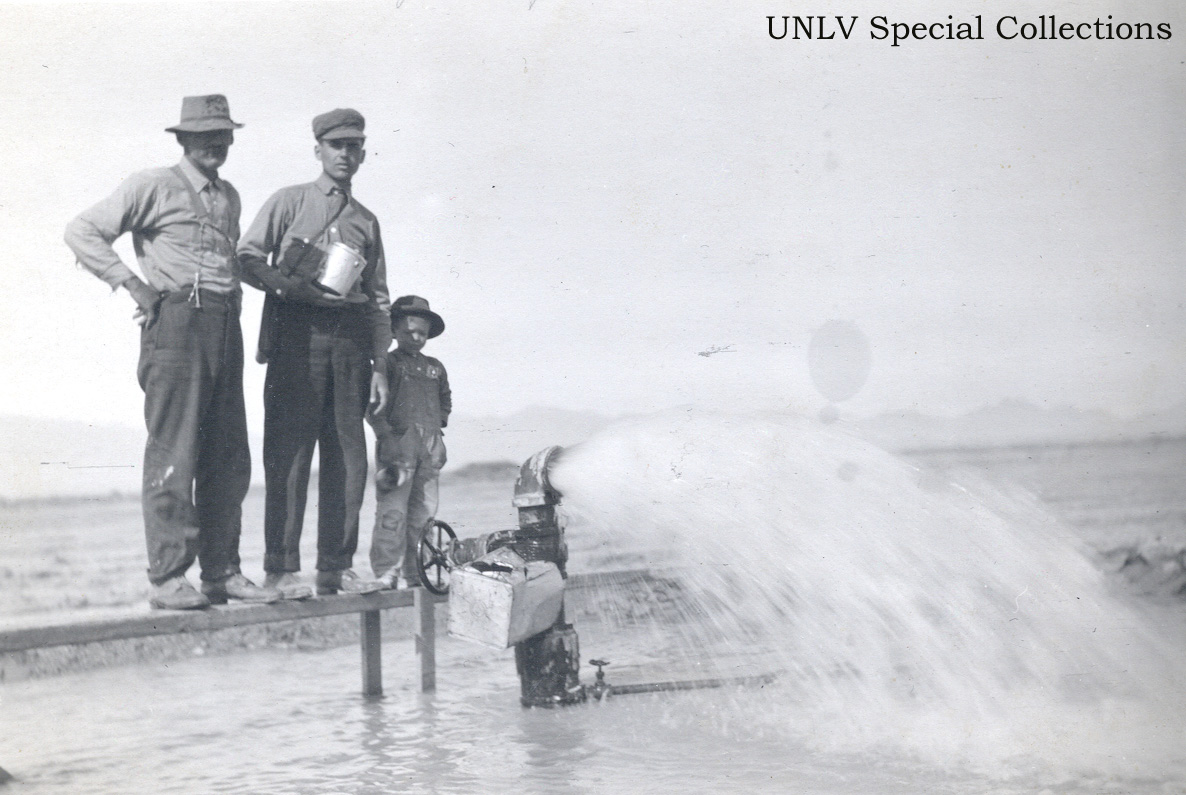
From UNLV Special Collections
In 1922, the U.S. Congress ratified the Colorado River Compact, which allocated the water in the Colorado River between Arizona, California, Colorado, Nevada, New Mexico, Utah, and Wyoming. Ninety years later, the provisions of this compact, which allocated proportionally more water to California and Arizona, have led to fears of water shortages to Las Vegas, Nevada. 

Instead of trying to challenge or re-write the Compact, Las Vegas has been engaged in finding other sources of water nearby in counties east of Las Vegas, and even in Southern Utah. Earlier this year, the Nevada State Engineer approved a proposal for a pipeline that would bring water from nearby Lincoln and White Pine Counties. In August, the BLM released a review of the project that stated the pipeline should be allowed to traverse the public land, but not cut into Snake Valley, Utah, where the project has met the hardest opposition. This week, the Colorado River Commission backed this plan.


Groups such as the Great Basin Water Network call the move a "water grab" and insist that Las Vegas focus on improving efficient use of current water sources rather than exploiting new sources. Others are concerned about the effects the de-watering of Lincoln and White Pine Counties will have on the region.


Source: Las Vegas Sun

Tuesday, September 11, 2012

Bring Hetch-Hetchy Valley Back?

Norimitsu Onishi of the New York Times reported on an upcoming city-wide ballot measure in San Francisco to dismantle the Hetch-Hetchy Reservoir and restore the valley. Currently the reservoir, which is formed by the 364-foot O'Shaughnessy Dam, stores 360,000 acre-feet of San Francisico's drinking water supply.

Many city officials and opponents to the restoration question whether adequate water can be found elsewhere, and balk at the potential cost of decommission and ecological restoration ($1-$10 billion, depending on who you ask). Other considerations include impacts to hydropower generation and agriculture.

Monday, September 10, 2012

Broken Pipe (and dam) Dreams EDITORIAL

The Western expansion of the 19th century began with the Louisiana Purchase, which effectively doubled the size of the country. Thousands began settling further and further west, building towns and farms. The idea of land ownership for the individual was heralded as being the very definition of liberty.

As people settled into the more arid landscapes in the intermountain west, infrastructure projects became essential to the long-term survival of the new settlements. Dams captured water during its most abundant season - the spring runoff - and canals diverted that water to the farms and towns when and where it was needed.