Showing posts with label water rights. Show all posts

Friday, August 23, 2013

Reduced Colorado River releases from Lake Powell

In Salt Lake City last week, the BLM announced that the amount of water released from Lake Powell in water year 2014 (starting in October) will be reduced by 9%. The volume of water released each year is based on guidelines set in 2007 by the Secretary of Interior, which coordinate the management of large reservoirs along the Colorado River, including Lake Powell and Lake Mead. According to the guidelines, "A Shortage Condition exists when the Secretary determines that insufficient mainstream water is available to satisfy 7.5 maf [million acre feet] of annual consumptive use in the Lower Division states." This certainly applies today, and the release from Lake Powell will be 7.48 maf, the lowest release since Glen Canyon Dam was constructed in the 1960s. The BLM projects that Lake Mead levels will decline an additional eight feet next year as a result of the reduced release from Lake Powell.

Upper Colorado Regional Director Larry Walkoviak said in a statement, "This is the worst 14-year drought period in the last hundred years."

photo credit: Glen Canyon National Recreation Area
Although the immediate effect on Colorado River water rights holders is small for now, shortages like this are predicted to become more frequent because of changing climate conditions. As Erik Stokstad reports in Science Insider, more water has been promised to users than can be delivered.

Monday, July 29, 2013

Water Infrastructure getting more attention, discourse, and... funding?

Water infrastructure issues are getting more attention across the country as communities struggle with water availability and aging infrastructure issues during the hottest months of the year. States, communities, and private organizations (both non-profit and for-profit) across the US are calling attention to the problem and pledging to commit finances and legislation to try to address these water-related challenges.

Water availability issues, such as those faced in the U.S. West and in rapidly growing regions across the whole country struggle with not only having to maintain and repair their systems to meet the capacity and level of service for which they were designed, but also having to consider future growth and increased strain on water sources as populations expand, or as drought constricts the amount of water available. Aging infrastructure is an issue facing many communities because infrastructure projects built decades ago with large investments are now facing the end of their useful designed life, and the funding for replacements is harder to come by due to strained economic and political conditions. This is having an effect on water quality in many areas, as well as leading to infrastructure failures and water restrictions.

So what does all this mean? Well, it will likely lead to rate increases, a trend which has already begun and will continue. This has implications for lower income communities who already pay a greater share of their income for water services. Rate increases will likely be more noticeable in smaller communities, where the lack of economies of scale precludes the utility from spreading the costs over more people.

This could lead to increased violations of water quality regulations under the Clean Water Act and the Safe Drinking Water Act. Both health-based and non-health based violations could go up as a result of water systems not being able to pay for needed infrastructure upgrades.

It could also lead to consolidation of water utilities, especially by larger and more financially viable water systems or even private companies.

The United Nations recently decided that access to safe drinking water was a human right. Here in the United States, we have been fortunate to have relatively cheap access to very high quality drinking water. However, water infrastructure is a huge challenge that casts a spotlight on several related issues including funding for infrastructure projects, affordability and rate setting, environmental justice, water availability and population growth, and climate change.

Tuesday, April 23, 2013

Utah Governor stops Nevada water sharing agreement

This month, Utah Governor Gary Herbert said he would not sign an agreement that would divvy water under the shared border between Utah and Nevada. This water had been eyed by the thirsty metropolis of Las Vegas a few hours south. The pact was drawn up four years ago in response to a 2004 Congressional order that required the states to reach an agreement before any transfers of water would be permitted in the Snake Valley. The agreement was controversial because of a proposed pipeline enabled by the pact that would send Snake Valley water to Las Vegas. The pipeline spurred protests from farmers, environmentalists, tribes, and ranchers in Utah and parts of Nevada.
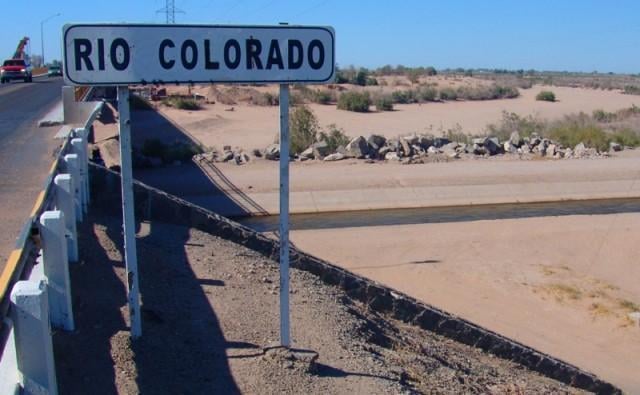
It was not clear whether Gov. Herbert would support the agreement, and he shocked both supporters and critics of the project when he announced his decision. He told the Deseret News, "At the end of the day, when it comes down to those people who have the most to lose — it's their water, their lifestyle, their livelihood — I can't in good conscience sign the agreement. It's that simple."

In Utah, the reaction has been positive. The majority of local citizens and officials at the county level in Millard and Juab counties did not support the water sharing agreement.

The director of Nevada Department of Conservation and Natural Resources said that they are "evaluating all of [their] options in light of Gov. Herbert's decision." A lawsuit could be forthcoming.


Monday, November 26, 2012

U.S. - Mexico treaty a good sign

Officials from the U.S. and Mexico met in San Diego this week to sign an amendment to the 1944 Colorado River treaty that provides for increased flexibility and international cooperation on infrastructure developments, as well as conservation goals. The deal, known as Minute 319, is being lauded as a win-win, and as the Summit County Citizen's Voice reports, that is a rarity in Western water disputes. It is unprecedented in its focus on conservation as well as equitable access. It could raise the level of Lake Mead up to 15 feet to accomodate storage rights for Mexico, good news for recreationists. Recreation is a growing economic service of the Colorado River and often helps to bridge the gap between other economic demands and ecosystem health in policy design.

Friday, September 21, 2012

40,000 acres to be reserved for Rio Grande water conservation

Colorado and the USDA announced the enrollment of 40,000 acres of irrigated cropland in the Rio Grande basin into the Conservation Reserve Enhancement Program (CREP). The program will incentivize land owners to enroll their properties as wildlife habitat, grasslands, or wetlands, which will have a positive impact on groundwater replenishment and in-stream flows. Landowners will agree to reserve contracted lands as restoration areas and save a proportional amount of irrigation water for 14-15 years. They also have the option of participating in an irrigation water retirement program.

Source: Valley Courier http://www.alamosanews.com/v2_news_articles.php?heading=0&page=72&story_id=26519

Monday, September 17, 2012

SNWA pipeline may face delays due to springsnail species

Environmental groups are suing the federal government to list a number of springsnail species to the Endangered Species List. If successful, they could block the 280-mile pipeline currently under review that would transport water from underground aquifers in rural valleys in Nevada to Las Vegas.

The pipeline is the focus of a BLM Environmental Assessment currently open to public comment. (See previous post), and the project has been approved by the State Engineer despite considerable controversy.
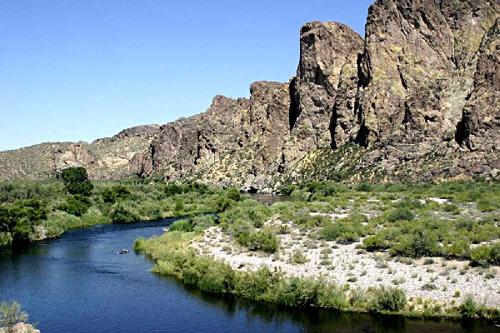
A 2009 USFWS study named several snail species as needing further investigation to determine their status as endangered or threatened.

Source: San Francisco Gate


Friday, September 14, 2012

Arizona State Trust Lands not covered under Reserved Water Rights Doctrine

Courts in Arizona ruled that the Reserved Water Rights doctrine, which states that federal and tribal lands reserve the right to use water necessary for the stipulated functions for those lands, does not apply to state trust lands in Arizona. Federal lands were granted to the state in Arizona in 1910 for government buildings, universities, prisons, and other uses. Arizona argued that since the U.S. congress granted those lands for specific purposes, they served a federal purpose and could therefore apply for federal reserved water rights, but the court disagreed.

About 6.5 million of Arizona's over 9 million acres of state trust land are in the Little Colorado and Gila River basins.

Source: Courthouse News Service

Wednesday, September 12, 2012

Reserved Water Rights for Flathead Res under negotiation

In Montana, negotiations are stalling over Flathead Reservation water rights. The Montana Reserved Water Rights Compact Commission has been negotiating compacts with federal agencies and other tribes since 1979, but this particular reserved water rights situation is a bit more complicated, reports the Missoulian.

First, on the Flathead Indian Reservation, the Kootnai and Salish Native Americans tribes are a minority because of the 1904 Allotment Act that allowed settlement by homesteaders. Second, treaties with these tribes allowed them to continue to access and hunt their traditional lands, which includes riverways off of the reservation. It is not clear how these will be applied to the compact.

Any compact that is negotiated must be ratified by the Montana Legislature and the U.S. Congress, and time is running out. The negotiations are set to expire July 2013.


Monday, September 10, 2012

Water Rights in Southeastern Colorado

Dan Gordon at the Denver Post reported yesterday that farmers in southeastern Colorado are selling off their water rights to companies and investors. This is a trend that has been occurring in the West for a few decades. As urban populations grow, municipalities, investors, and corporations have been buying off water rights from neighboring farmers and ranchers. This means that productive farmland is converted either into dry crop land, left barren, or developed into commercial or residential uses.

This phenomenon raises concerns about suburban sprawl, food scarcity, and water speculation.