However, all is not well in the Arkansas River Valley, which is continuing to struggle under continuing drought conditions. In some areas, especially the lower end of the valley, the drought is entering its third year. Snowpack is currently at 26% of its normal volume, compared to the slightly less dismal average of 46% in the rest of Colorado. (The Chieftain)
Thursday, November 29, 2012
Arkansas River to remain dam free
However, all is not well in the Arkansas River Valley, which is continuing to struggle under continuing drought conditions. In some areas, especially the lower end of the valley, the drought is entering its third year. Snowpack is currently at 26% of its normal volume, compared to the slightly less dismal average of 46% in the rest of Colorado. (The Chieftain)
Labels:
conservation,
drought,
infrastructure,
water policy
Monday, November 26, 2012
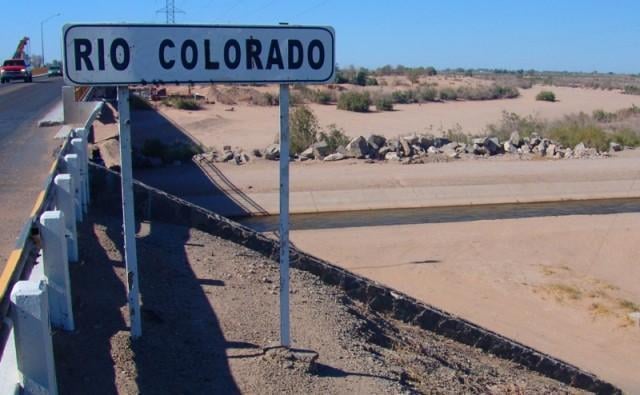
U.S. - Mexico treaty a good sign
Labels:
Colorado River,
transboundary,
water policy,
water rights
Friday, November 9, 2012
Cascading Systems: Fire and Water
The Coloradoan reported today on the cascading effects of drought, wildfire, and water quality. As the High Park fire near Greeley continues to burn, ash pollution to the Poudre River augments the issues from the area's ongoing drought. Sediment load has spiked due to post-fire erosion. The sediment has clogged drinking water intakes, and pollution levels of inorganic carbon may require expensive chlorination treatment. Ft. Collins has responded to the pollution of the Poudre River, their main drinking water source, by working with CSU and neighboring cities to access Horsetooth Reservoir Water. However, the reservoir depends on spring runoff to replenish its supplies, and since the drought doesn't look like it will abate any time soon, Ft. Collins may have to return to using the sullied water from the Poudre River and implementing expensive water treatment procedures.
This is all illustrative of the cascading effects of wildfire, drought, erosion, and water quality. Climate change scenarios predict that extreme droughts are likely to occur more often in the future, making management of water resources even more of a challenge.
Labels:
climate change,
drought,
water quality,
wildfire
Thursday, November 1, 2012
What Hurricane Sandy tells us about Infrastructure
We've all heard by now some of the critical infrastructure that has been damaged by Hurricane Sandy in New York, New Jersey and the rest of the affected area. Subway tunnels, power plants, sidewalks and roads, communication systems, internet and cable networks, and water and sewer pipes are some of the infrastructure damaged in the 100-year storm. State officials, FEMA, and the White House have dealt with the hurricane impressively, responding quickly and providing relief to people whose properties were damaged. I am amazed at how well people cooperated together to make sure people were safe.
New York Governor Andrew Cuomo spoke Wednesday at a press conference, stating that climate change cannot be ignored by politicians anymore, who are playing a game of Russian Roulette by failing to address the issue. He advocated for upgrading and re-designing New York's infrastructure, much of which is outdated and in-need of maintenance or re-design.
The hurricane affords us the chance to dissect just how extreme weather events and infrastructure planning are related. I want to make sure I mention that although New York has huge infrastructure demands with a growing population and aging sewers, roads, and facilities, it has a comparatively proactive tax structure with which it tries to meet those demands. However, those remaining infrastructure deficiencies contributed to the scope of the damage incurred during the hurricane.
Water professionals and researchers (ahem) have been advocating for investment into our crumbling infrastructure for decades. In 2008, the American Society of Civil Engineers released a Report Card for New York detailing infrastructure deficiencies, stating that the state's bridges, roads, and mass transit system were vulnerable. The potential for more frequent extreme weather events as a result of climate change only makes the issue more important. However, a slumped economy and political grid-lock have stood in the way of significant upgrades or new policies. After the hurricane, New York, New Jersey and other affected states will acquire federal emergency funding to repair and upgrade infrastructure that probably needed upgrading before the storm hit.
Federal emergency funding is often used to repair infrastructure because of accidents that could have been avoided with a more proactive planning approach. This is borne of two things: lack of funding, and lack of political capital.
Lack of Funding: Cash-strapped communities all over the U.S. do not have access to the funds they require to make critical infrastructure upgrades. This forces them to wait for an emergency situation to qualify for federal or state emergency aide to address the problem. One example in Logan, Utah was a 2009 landslide that destroyed a 100-year-old, leaky, earthen irrigation canal on a steep hill. The landslide killed three people. As a result, federal funding was dispersed to the community, and a more efficient canal system will be installed at the federal taxpayer's expense.
Lack of Political Capital. Infrastructure is not a sexy issue, even though it is such an important part of our daily lives. In our democratic society, raising taxes for roads or pipes can be met with opposition, and looming elections can motivate a policymaker to simply "kick the can down the road." As a result it takes a trigger event - an accident, storm, etc. - before the general population supports a response, even if the issue has long been recognized by "insiders" as needing attention.
As a result, trigger events are often necessary to unlock the political and monetary capital needed to make significant infrastructure investments. However, this is problematic for two reasons.
1) It externalizes the cost for local infrastructure upgrades to federal taxpayers. When a disaster occurs, communities can apply for federal emergency funding, relegating the cost for local infrastructure upgrades to federal taxpayers. In addition, federally-funded projects incur extra costs to cover NEPA and other federal requirements and processes, increasing the overall cost of the project.
2) It creates emergency situations. Investment into climate change-resilient, safe infrastructure would ensure that a community could withstand extreme weather events more effectively. Failure to do so creates a scenario where emergency situations are not only inevitable, they are needed in order to address infrastructure needs in a totally reactive policy environment. The policy approach is therefore "repair the past" rather than "plan for the future." The uncertainty brought by climate change only increases the responsibility on policymakers and politicians to prioritize infrastructure investment as a matter of national security and ethics.
Proactive planning at the state and local level can make communities more resilient to emergency situations, avoid certain negative outcomes, and help them rely less on federal emergency funding to correct pre-existing infrastructure issues. As a result, federal emergency funding can be better allocated across the country to address what proactive local and state planning could not foresee.
See New York Times, the Scientific American,
The hurricane affords us the chance to dissect just how extreme weather events and infrastructure planning are related. I want to make sure I mention that although New York has huge infrastructure demands with a growing population and aging sewers, roads, and facilities, it has a comparatively proactive tax structure with which it tries to meet those demands. However, those remaining infrastructure deficiencies contributed to the scope of the damage incurred during the hurricane.
Water professionals and researchers (ahem) have been advocating for investment into our crumbling infrastructure for decades. In 2008, the American Society of Civil Engineers released a Report Card for New York detailing infrastructure deficiencies, stating that the state's bridges, roads, and mass transit system were vulnerable. The potential for more frequent extreme weather events as a result of climate change only makes the issue more important. However, a slumped economy and political grid-lock have stood in the way of significant upgrades or new policies. After the hurricane, New York, New Jersey and other affected states will acquire federal emergency funding to repair and upgrade infrastructure that probably needed upgrading before the storm hit.
Federal emergency funding is often used to repair infrastructure because of accidents that could have been avoided with a more proactive planning approach. This is borne of two things: lack of funding, and lack of political capital.
Lack of Funding: Cash-strapped communities all over the U.S. do not have access to the funds they require to make critical infrastructure upgrades. This forces them to wait for an emergency situation to qualify for federal or state emergency aide to address the problem. One example in Logan, Utah was a 2009 landslide that destroyed a 100-year-old, leaky, earthen irrigation canal on a steep hill. The landslide killed three people. As a result, federal funding was dispersed to the community, and a more efficient canal system will be installed at the federal taxpayer's expense.
Lack of Political Capital. Infrastructure is not a sexy issue, even though it is such an important part of our daily lives. In our democratic society, raising taxes for roads or pipes can be met with opposition, and looming elections can motivate a policymaker to simply "kick the can down the road." As a result it takes a trigger event - an accident, storm, etc. - before the general population supports a response, even if the issue has long been recognized by "insiders" as needing attention.
As a result, trigger events are often necessary to unlock the political and monetary capital needed to make significant infrastructure investments. However, this is problematic for two reasons.
1) It externalizes the cost for local infrastructure upgrades to federal taxpayers. When a disaster occurs, communities can apply for federal emergency funding, relegating the cost for local infrastructure upgrades to federal taxpayers. In addition, federally-funded projects incur extra costs to cover NEPA and other federal requirements and processes, increasing the overall cost of the project.
2) It creates emergency situations. Investment into climate change-resilient, safe infrastructure would ensure that a community could withstand extreme weather events more effectively. Failure to do so creates a scenario where emergency situations are not only inevitable, they are needed in order to address infrastructure needs in a totally reactive policy environment. The policy approach is therefore "repair the past" rather than "plan for the future." The uncertainty brought by climate change only increases the responsibility on policymakers and politicians to prioritize infrastructure investment as a matter of national security and ethics.
Proactive planning at the state and local level can make communities more resilient to emergency situations, avoid certain negative outcomes, and help them rely less on federal emergency funding to correct pre-existing infrastructure issues. As a result, federal emergency funding can be better allocated across the country to address what proactive local and state planning could not foresee.
See New York Times, the Scientific American,
Labels:
climate change,
Editorial,
infrastructure,
water policy
Tuesday, October 23, 2012
Water Rate Increases throughout U.S.
USA Today reports that the prices for water have increased over the last 12 years in municipalities all over the U.S. The trend is expected to continue as municipalities grapple with infrastructure costs and upgrades that loom ahead.
Notable Western cities rate hikes:
Reno +37%
Cheyenne +64%
Phoenix +69%
Denver +78%
Salt Lake City +80%
Colorado Springs +97%
Las Vegas +129%
San Francisco +211%
Adjusting for inflation, rates have gone up do to increased electric costs for water utilities, federal regulatory costs, and labor, among other things. Some have likely gone up simply because rates were previously too low. In many states, municipal utilities are restricted from saving funds collected each year for future maintenance costs, therefore deferring price hikes until upgrades are unavoidable. Now that many municipalities face looming maintenance projects and upgrades, they have no other choice but to make significant rate increases.
Some cities, especially San Francisco and Las Vegas, have been using rate manipulation as a tool to decrease water use per capita. Both cities rely on expensive infrastructure to import water from other locations, and support large populations that put increasing pressure on their limited water supplies.
Water remains comparatively cheap in most places, and despite rate hikes, billions of gallons of water are wasted each year. Prices would likely have to go much higher in order to see much of a decrease in use for things like lawn-watering and car-washing, two very water-intensive uses. However, for low-income communities, the costs of water can be especially burdensome, and low-income communities often have less access to newer, more efficient water appliances, and rely on outdated infrastructure. It is a challenge for managers and policymakers to figure out ways to raise funds to cover the costs of maintaining water infrastructure, while avoiding disproportionate financial burdens on certain sectors of society.
Notable Western cities rate hikes:Reno +37%
Cheyenne +64%
Phoenix +69%
Denver +78%
Salt Lake City +80%
Colorado Springs +97%
Las Vegas +129%
San Francisco +211%
Adjusting for inflation, rates have gone up do to increased electric costs for water utilities, federal regulatory costs, and labor, among other things. Some have likely gone up simply because rates were previously too low. In many states, municipal utilities are restricted from saving funds collected each year for future maintenance costs, therefore deferring price hikes until upgrades are unavoidable. Now that many municipalities face looming maintenance projects and upgrades, they have no other choice but to make significant rate increases.
Some cities, especially San Francisco and Las Vegas, have been using rate manipulation as a tool to decrease water use per capita. Both cities rely on expensive infrastructure to import water from other locations, and support large populations that put increasing pressure on their limited water supplies.
Water remains comparatively cheap in most places, and despite rate hikes, billions of gallons of water are wasted each year. Prices would likely have to go much higher in order to see much of a decrease in use for things like lawn-watering and car-washing, two very water-intensive uses. However, for low-income communities, the costs of water can be especially burdensome, and low-income communities often have less access to newer, more efficient water appliances, and rely on outdated infrastructure. It is a challenge for managers and policymakers to figure out ways to raise funds to cover the costs of maintaining water infrastructure, while avoiding disproportionate financial burdens on certain sectors of society.
Labels:
environmental justice,
utilities,
water policy
Monday, October 22, 2012
A Twenty-First Century Water Policy: A Review - 1 of 3
The Pacific Institute released A Twenty-First Century Water Policy this year. The book outlines the problems we face in our country with regard to water policy, and the gaps that future policy approaches need to address to meet today's (and tomorrow's) water management needs. This is the first in a series of three entries that review the book.
Think of A Twenty-First Century Water Policy as a State of the Union address, a dozen chapters assessing where we are and where we should go with regard to water policy in the United States. The scope is incredibly wide, and that is not lost on the authors, who labor to paint a picture of the nation's water resources in the first two chapters: first that our freshwater resources, though relatively abundant in the U.S., are distributed unequally across our geography, most of the water in the eastern half. And second, population growth throughout the last century has led to massive projects that boil down to manipulating surface water and withdrawing groundwater supplies in order to meet needs, often at the expense of ecosystem health and environmental quality. Incremental policy changes has led to siloed management situation where each state regulates water a little differently, several agencies all have some level of interest in water management, and coordination between all of these governing entities is minimal. Peak water, a sort of limit of how much water can be withdrawn for human use without diminishing future supply, may have already been passed, especially in the West. And increase energy development projects, which require water, put even more strain on water-strapped communities throughout the West. The authors maintain that a new approach is needed: a "soft path" that re-focuses our policy strategy to deliver "water-related services matched to users' needs and resource availability," instead of relying completely on 19th century infrastructure and decision-making solutions.
Water injustice is the focus of the third chapter. Abundant research in the field of Environmental Justice has uncovered depressing evidence that environmental costs are disproportionately borne by low-income communities and communities of color. Current water policies mostly fail to address environmental justice issues. A few of the examples are: subsistence-dependent communities being more susceptible to contamination rates than more affluent communities; higher risks associated with industrial activities; less access to water-related recreation; contamination from energy development; and vulnerability to climate change. Regulatory agencies do a poor job at enforcing water quality standards in low-income communities and communities of color to the same rigorous level as higher-income or white communities. Each of these issues can result in cumulative risks disproportionately borne by the poorer, more rural communities in our country.
These issues have been pinpointed by many researchers throughout the last few decades. The Pacific Institute suggests that environmental justice be more officially integrated into a comprehensive federal water policy framework by encouraging more collaboration between the different regulatory agencies and states, and by recognizing the human right to water.
The pitfalls of our current water policy approach are pretty well known. And I believe the "soft path" to water management is our best chance at avoiding massive water shortages and ethical violations. The next entry will highlight some of the more specific issues involved in the "soft path," including water quality, ecosystem services, urban infrastructure issues, agriculture, energy, and climate change. The final entry will address specific policy strategies suggested by the authors, and discuss the ways in which the soft path can be adopted and implemented.
The last entry will also include my internal monologue over whether the soft path can ever or will ever be implemented in our country, call it the diatribe of a tormented cynic.
| Associated Press |
These issues have been pinpointed by many researchers throughout the last few decades. The Pacific Institute suggests that environmental justice be more officially integrated into a comprehensive federal water policy framework by encouraging more collaboration between the different regulatory agencies and states, and by recognizing the human right to water.
The pitfalls of our current water policy approach are pretty well known. And I believe the "soft path" to water management is our best chance at avoiding massive water shortages and ethical violations. The next entry will highlight some of the more specific issues involved in the "soft path," including water quality, ecosystem services, urban infrastructure issues, agriculture, energy, and climate change. The final entry will address specific policy strategies suggested by the authors, and discuss the ways in which the soft path can be adopted and implemented.
The last entry will also include my internal monologue over whether the soft path can ever or will ever be implemented in our country, call it the diatribe of a tormented cynic.
Labels:
book review,
water policy
Thursday, October 18, 2012
Clean Water Act turns 40
Today marks the official 40th anniversary of the Clean Water Act becoming law. The milestone has spurred a number of editorial content across the Internet - from Kristen Bell to the National Geographic. On this blog, I've already highlighted the law, its effect on pollution mitigation, and where the law currently falls short meeting our water management needs today here. Managers and commenters across the web have raised other issues that should be addressed in order to strengthen the CWA and water policy in the United States:
- Clarify the scope of the act to include small tributaries and waters that have ecological impacts on the waters of the United States (National Geographic)
- Focus on policy mechanisms to address non-point source pollution like fertilizer run-off and urban stormwater (LA Times)
- Retrofit urban and rural water infrastructure to meet current and future needs more efficiently (LA Times), especially sewage treatment plants (NY Times)
The benefits of the 1972 Clean Water Act are obvious. The Chattanoogan lists some of the statistics:
- Clarify the scope of the act to include small tributaries and waters that have ecological impacts on the waters of the United States (National Geographic)
- Focus on policy mechanisms to address non-point source pollution like fertilizer run-off and urban stormwater (LA Times)
- Retrofit urban and rural water infrastructure to meet current and future needs more efficiently (LA Times), especially sewage treatment plants (NY Times)
The benefits of the 1972 Clean Water Act are obvious. The Chattanoogan lists some of the statistics:
- The number of Americans receiving clean drinking water has increased from 79 percent in 1993 to 92 percent in 2007;
- More than 2,000 water bodies identified as impaired in 2002 now meet water quality standards;
- 60 percent more Americans were served by publicly-owned wastewater treatment facilities from 1968 to 2008.
The act was passed by a bi-partisan Congress. In today's political context, it's difficult to imagine a bi-partisan effort that would strengthen the CWA. But that's exactly what needs to happen in order for our country to face the coming water-related crises.
Labels:
Clean Water Act,
infrastructure,
water law,
water policy,
water quality
Subscribe to:
Posts (Atom)